A chronicle of the the adventures of the S/V Libertatia and her crew as they travel the world.
Friday, February 14, 2014
The Libertatia Voyaing Collective Seeks New Members
Greetings from sunny Berkeley, California where the Libertatia is currently docked, awaiting her next voyage. Our apologies for falling out of touch for some time, but we are all well and engaged in our own personal pursuits, mostly on land. Since returning from Mexico in the late fall of 2012, the Libertatia has been at home here in her slip and aside from somewhat regular sails on the bay and the occasional peak out the golden gate, the boat has been relatively dormant, lived on and looked after, but dormant.
We have reached an interesting point in the story of our collective, as the boat rests in the harbor, our energy for the Libertatia as collective members is somewhat dispersed. Not only are we all exploring and developing our lives in other directions but we are also all feeling somewhat burnt out when it comes to the Libertatia, and understandibly so: we've spent cumulatively more than a year restoring and maintaining the boat, we've lived together aboard for nearly three years, and we've sailed over 10,000 miles! At this point, we could get rid of the Libertatia but we don't want to do that for a number of reasons. First of all, we all have a vested interest in the boat, collective mission, and continuation of the project. It's a beautiful thing and we do not want to see it fade! Secondly, although our current interest has waned, all of us feel excited by the idea of ocean voyages aboard the Libertatia in the future. Lastly, we view this entire project, the boat and everything that has come with it, as a gift and we want to proceed in that same spirit of giving. We do not want to sell the boat for a couple thousand bucks but rather share it with others who hold the same values of inspiration, passion for exploration and adventure, and positivity. That's where you come in.
For all of the reasons listed above, we are actively seeking new collective members to breathe new life into the Libertatia, and her collective, and voyage again. When it comes to exactly what this looks like, we are open. All we are interested in is teaming up with like-minded people to share what we have created and carry on with our mission; exploring, inspiring, and sharing as we go.
The type of people we are seeking may also vary greatly. Sailing experience and knowledge, as well as general familiarity with boats, are a plus but not entirely necessary, as we know from experience. Hopefully, new members will be somewhat mechanically capable but willingness to try is even more important. Above all else we are looking for people who are ready to communicate and work well with others, willing to work hard and remain positive in tough situations (of all kinds), willing to learn and share freely, capable of being flexible in response to the changing demands of life aboard, and ready to make friends and have fun. Sailing and living aboard, as well as taking care of the boat, also does cost some money so we are hoping that new members will be able to contribute their fair share of the cost of running the boat. Although, boats generally are expensive, our expenses on the Libertatia have been very manageable spread out over the collective group.
Life as a collective member and sailor aboard the Libertatia has many faces but those involved can expect to live and work very closely with several others and carry their respective weight in being responsible for the boat. Sometimes we are at the dock and the Libertatia's needs, aside from routine maintenance, are relatively low. Other times however, sailors each carry a lot of responsibility, such as standing watch in trying conditions, working very hard to make timely repairs, and being ready to jump out of bed into the cold, dark, and wet to assist other crew members. In the end, life aboard the Libertatia is an adventure: with the beauty come huge challenges of all kinds, risks, and danger.
We could say a lot more here in this post about our organization and our story thus far but we invite you explore our website and contact us with any questions if you want to hear more. Times aboard may be hard and the sacrifices may be many but sailing aboard the Libertatia is one of the most wonderfully romantic things one can do in this life on earth. At least that is how we feel. May the winds that brought this message to you bring you back to us. Write us an email! Best wishes and until soon.
Aloha,
The Libertatia Voyaging Collective
libertatiavoyage@gmail.com
Wednesday, September 26, 2012
Cabo San Lucas- tourists, jet skis and pirates.
| sunny side up |
| Cabo Fever! |
Check out more photos of Cabo here!
Turtle Bay - Should we stay or should we go???
| Fastest cab in the Bay! |
| Which one's the sun? |
including where to eat, and taught us some local slang. My favorite phrase translates as, "Go bite a goat," which is a common greeting among fishermen.
We all enjoyed making new friends, such as Antonio, who fed us grandmother-made menudo, and told us stories of old Turtle Bay. Things here have expanded from the original small fishing village to a thriving town full of expensive cars, due to the lobster industry. Despite the presence of wealth, we found that the residents of Turtle Bay have a strong spirit of resourcefulness and gratitude for everything they have, as well as being remarkably open to travelers. We were fortunate to attend a quinciniera, or 15th birthday, culturally a milestone for young women. It seemed that the entire town was in attendance, and we all danced to the great music of a live Mexican rock band until the early hours. With the party going strong, we danced our last dance at an hour near daybreak, before calling it a night and walking home with the music fading away behind us.
After a few days of fun, we carefully considered whether we should sail to Cabo San Lucas during what was officially hurricane season, or call Turtle Bay home for the next several months. Due to low atmospheric moisture off the coast of Central America, as well as the below average sea temperatures off Cabo San Lucas, we concluded that our voyage would be just as safe in the middle of July as it would have been earlier in the season.
Our early morning departure was noted by a honk of the trumpet. Some fishermen in a panga waved heartily as our sails pulled us away.
| ...And then the waters parted. |
Isla Cedros - ROCKIN' OUT!!!!!
| Vincent, the amateur geologist! |
Cedros is home to the fabled Las Palmas anchorage, where two lone palm trees mark the site of a desert spring that comes out of the mountains. Las Palmas is said to have been a popular watering hole for passing Spanish ships during the first European explorations of the Pacific coast. This legendary spot not only afforded us delicious spring water and epic mountain hiking, but gave us our first experience with the often poorly charted areas of Latin America, which we had been warned of by other cruisers. Even with GPS and good charts, making landfall at night in a new place is a challenging game.
| Libertatia- Sailing where no boat has sailed before!!! |
We tacked toward the island and sounded around a spot which showed 10 ft depth on the NOAA chart, but we got nothing on a cast of the lead-line. Finally we made it to what seemed like the anchorage after dark, but we couldn't be sure. The hand-held GPS, Chartplotter and paper charts all showed us to be anchored inside a tiny cove 88 ft from shore, but to the eye it seemed like we were about 500 ft from shore just to the south of the small cove. We knew it would be interesting to see what was really going on in the daylight.
At sunrise it was apparent that we were in fact about a mile south of Las Palmas, so we raised anchor and ghosted along towards our destination. A check of the GPS, which showed us to be sailing along high and dry on land, really highlighted the inaccuracies that one faces when navigating in foreign lands.
Finally anchored safely at Las Palmas, the crew went ashore to explore the majestic, desolate island.
| Running out of water on the way to the top was worth it! |
San Quintin- don't try this one at home!!!
Along
Baja's Highway 1 lies San Quintin, a small way-post type town. Glancing
at a chart, its large protected harbor seems like a cruiser's dream; a
long channel leading to a protected bay near town. We were looking for
such a harbor to replenish our food supplies and to enjoy a change of
pace from the "open roadstead" anchorages we had been visiting so far.
Lured by a fellow cruiser's promises of an easy approach through the
long, shallow channel leading to San Quintin, we made sail from Isla San
Martin with high hopes.
However, heavy shoaling in the estuary and an unusual huge south swell made the approach to the channel impossible. We elected to find the next most hospitable anchorage, which was off the beach near a hotel some ways out of town.
We needed groceries. Anchored about 1/4 mile from the open beach, it was hard to tell from the boat how big or small the surf was breaking on shore. From the sound of loud crashing waves, we decided the dinghy was not an option. Emmett, in full gear, with dry bag, set out for the beach to test the waters. We all held our breaths as we watched Emmett rise and fall in the waves almost breaking near shore. A few moments later Emmett called on the handheld VHF to say, "Go for it!!!" Excited by the prospect of fresh fruit and pastries in the town, Vincent, Brooke, and Crystal donned wetsuits and jumped in. After successfully filling the dry bags with exciting new entree options, the crew split into two groups; one to make phone calls home, and one to return the groceries.
On our way back, we (Vincent and Crystal) met a fisherman who picked us up in a truck and gave us a lift back to the beach. We filled him in on why we were dripping wet, dressed in wetsuits and walking through a dusty town with sugar smeared on our faces. Our description in Spanish must have sounded something like, "We swim. For food. Sailors, yes. We like fish, too!" After our interesting description of what we were doing, the fisherman shook his head and warned us of the rip current, as well as the increasing size of the waves as night falls. He suggested that we make the long swim home in the morning. The sun had set, but in the darkening twilight we swam out into the breakers of the cold Pacific ocean. During this time Emmett and Brooke had safely reached the boat, radioing that they had made it. After a few attempts, we returned to the beach in complete darkness, feeling a bit defeated and unsure of what to do next.
By the mysterious ways of this world, the fisherman had been watching us, and as we walked down the beach weighing our options, our paths once again crossed.With few words exchanged, we were in his truck on the way to his cozy self-built home where his immediate and extended family lived. We thanked him profusely for opening up his home to us, and he responded by telling us an amazing story: He explained that once, while crossing the border to the United States, an American had saved his life in the desert when he had run out of water several days before. This man took him in, hydrated him, fed him and gave him money to get to his destination. He said that after that experience, he vowed to help anyone in a compromised situation...with a special soft spot for Americans.
Our hearts were deeply touched, and our minds at ease among our new friends. And fast friends we became, staying up until the wee hours looking at family photos and reminiscing with little notice of our language barrier. When the dishes were done and we were outfitted with new, dry pajamas, we quickly fell asleep. We woke rejuvenated, ready to attempt our swim again.
It still seemed a bit too rough to swim through the large shark-infested ;) breakers, so the group elected to try another method of reaching the boat. We knew the town had a large fishing fleet, so we decided to try hiring a boat from the town of San Quintin all the way through the channel and estuary area back to the boat. Hitchhiking towards town on this rural stretch of highway, one of the vehicles that passed was a BerryMex agricultural worker transport bus. We flagged the bus down, but unfortunately, the driver informed us that it was only for BerryMex workers. It was a unique experience to be standing where the food that we so effortlessly enjoy from the common American grocery store is actually produced. In a twist of fate, the driver turned around and invited us onto his empty. With the jams pumped up high, we raced into San Quintin, listening to America's finest dance remix modern pop!
He dropped us off on a dusty corner and pointed in the direction we should start walking. We hitchhiked until arriving at the Old Mill, a popular tourist hang-out and hotel. It being 5 o'clock in the afternoon, the fishermen and their pangas (motor skiffs) were done for the day. We were told that no one would take us all the way. Not only was the boat about 20 miles away, it required careful navigation through the drifting sand bars of the circuitous, narrow channel. Finally we found a panga operator who agreed to take us not only back to our boat, but on what became a memorable white-knuckle ride. The panga was a high-speed wave jumping machine, and the operator was highly attuned to the patterns of the breaking waves that we faced outside the channel. It was thrilling and a bit terrifying, but we safely arrived back to Liberatia with lots of groceries and memories. We thanked the panga driver and paid him for his gracious favor.
However, heavy shoaling in the estuary and an unusual huge south swell made the approach to the channel impossible. We elected to find the next most hospitable anchorage, which was off the beach near a hotel some ways out of town.
| the crew swim to shore |
We needed groceries. Anchored about 1/4 mile from the open beach, it was hard to tell from the boat how big or small the surf was breaking on shore. From the sound of loud crashing waves, we decided the dinghy was not an option. Emmett, in full gear, with dry bag, set out for the beach to test the waters. We all held our breaths as we watched Emmett rise and fall in the waves almost breaking near shore. A few moments later Emmett called on the handheld VHF to say, "Go for it!!!" Excited by the prospect of fresh fruit and pastries in the town, Vincent, Brooke, and Crystal donned wetsuits and jumped in. After successfully filling the dry bags with exciting new entree options, the crew split into two groups; one to make phone calls home, and one to return the groceries.
| Emmett and Brooke prepare to swim in the cold ocean |
On our way back, we (Vincent and Crystal) met a fisherman who picked us up in a truck and gave us a lift back to the beach. We filled him in on why we were dripping wet, dressed in wetsuits and walking through a dusty town with sugar smeared on our faces. Our description in Spanish must have sounded something like, "We swim. For food. Sailors, yes. We like fish, too!" After our interesting description of what we were doing, the fisherman shook his head and warned us of the rip current, as well as the increasing size of the waves as night falls. He suggested that we make the long swim home in the morning. The sun had set, but in the darkening twilight we swam out into the breakers of the cold Pacific ocean. During this time Emmett and Brooke had safely reached the boat, radioing that they had made it. After a few attempts, we returned to the beach in complete darkness, feeling a bit defeated and unsure of what to do next.
By the mysterious ways of this world, the fisherman had been watching us, and as we walked down the beach weighing our options, our paths once again crossed.With few words exchanged, we were in his truck on the way to his cozy self-built home where his immediate and extended family lived. We thanked him profusely for opening up his home to us, and he responded by telling us an amazing story: He explained that once, while crossing the border to the United States, an American had saved his life in the desert when he had run out of water several days before. This man took him in, hydrated him, fed him and gave him money to get to his destination. He said that after that experience, he vowed to help anyone in a compromised situation...with a special soft spot for Americans.
Our hearts were deeply touched, and our minds at ease among our new friends. And fast friends we became, staying up until the wee hours looking at family photos and reminiscing with little notice of our language barrier. When the dishes were done and we were outfitted with new, dry pajamas, we quickly fell asleep. We woke rejuvenated, ready to attempt our swim again.
It still seemed a bit too rough to swim through the large shark-infested ;) breakers, so the group elected to try another method of reaching the boat. We knew the town had a large fishing fleet, so we decided to try hiring a boat from the town of San Quintin all the way through the channel and estuary area back to the boat. Hitchhiking towards town on this rural stretch of highway, one of the vehicles that passed was a BerryMex agricultural worker transport bus. We flagged the bus down, but unfortunately, the driver informed us that it was only for BerryMex workers. It was a unique experience to be standing where the food that we so effortlessly enjoy from the common American grocery store is actually produced. In a twist of fate, the driver turned around and invited us onto his empty. With the jams pumped up high, we raced into San Quintin, listening to America's finest dance remix modern pop!
He dropped us off on a dusty corner and pointed in the direction we should start walking. We hitchhiked until arriving at the Old Mill, a popular tourist hang-out and hotel. It being 5 o'clock in the afternoon, the fishermen and their pangas (motor skiffs) were done for the day. We were told that no one would take us all the way. Not only was the boat about 20 miles away, it required careful navigation through the drifting sand bars of the circuitous, narrow channel. Finally we found a panga operator who agreed to take us not only back to our boat, but on what became a memorable white-knuckle ride. The panga was a high-speed wave jumping machine, and the operator was highly attuned to the patterns of the breaking waves that we faced outside the channel. It was thrilling and a bit terrifying, but we safely arrived back to Liberatia with lots of groceries and memories. We thanked the panga driver and paid him for his gracious favor.
| Happily ever after. |
Isla San Martin- Volcano in the Sea
With our
swarm of flies in tow, we made an easy passage to Isla San Martin, a
striking volcanic cone 20 miles from the town of San Quintin. The small
group of fishermen who live much of their lives on this island seemed to
be happy living in tune with nature as people of the sea. These people
fish through all the seasons of the year, catching lobster and halibut,
diving for seaweed, and harvesting shellfish. From their simple huts and
piles of seaweed on the beach, you wouldn't know that these fishermen
are some of the highest wage-earners in Baja.
We befriended
Chui, who showed us some of the highlights of the island and shared
dinner with us on board the Libertatia. Chui gave us some of the
island's sea snails, or caracoles, which he had dove for. They were
delicious! Chui also showed us a spectacular cave on the island.
Watching him turn the cactus and lava landscape into a clear path on our
way to the cave made clear his understanding of the island after a
lifetime of working there.
After a quick first visit, the crew returned the next evening for an enthralling walk through the various channels of the lava cave. With headlamps and ropes, we walked, crawled and climbed in amazement at the foreign world hidden under our feet. We were amazed at the complete darkness and convoluted holes, caverns, and inner topography of the cave. We discovered spiders, found roots descending who knows how many feet into the cave. Exploring this alien environment, I discovered that the earth is indeed full of mysteries and amazing phenomena which I had never seen before, much like sailing into the ocean for the first time. We marked the occasion of this special team excursion by creating a guestbook at the very end of the cave. For any cruisers or adventurers who make their way to the cave on Isla San Martin, be sure to sign it!
Check out more photos of Isla San Martin here!
| Sea Bat!!!!!!! |
| Lost! |
After a quick first visit, the crew returned the next evening for an enthralling walk through the various channels of the lava cave. With headlamps and ropes, we walked, crawled and climbed in amazement at the foreign world hidden under our feet. We were amazed at the complete darkness and convoluted holes, caverns, and inner topography of the cave. We discovered spiders, found roots descending who knows how many feet into the cave. Exploring this alien environment, I discovered that the earth is indeed full of mysteries and amazing phenomena which I had never seen before, much like sailing into the ocean for the first time. We marked the occasion of this special team excursion by creating a guestbook at the very end of the cave. For any cruisers or adventurers who make their way to the cave on Isla San Martin, be sure to sign it!
| Sailing itself, as well as our time in the rich islands of Baja, was replete with the many faces of nature. |
The Journey South and The Attack of the Seagulls
| They may seem harmless.... |
Our first stop out of the city of Ensenada was a small, rocky islet standing alone in the cold, foggy waters of northern Baja called Isla Todos Santos. Upon arriving to the island, we found that the cozy anchorage described in our ancient copy of Charlie's Charts had since been filled with tuna pens. These are open-ocean corrals where fishermen grow tuna that have been caught in the wild to be fattened under their supervision. This tuna-filled cove offering the only true anchorage on an otherwise rugged, inhospitable islet, we drifted a mile or so north towards a small, protected bight between the north and south islets. The cry of thousands of seagulls on shore, leopard seals swimming among kelp beds, as well as a swarm of flies descending upon the boat, gave us a sense of the ruggedness and wildness of the isolated islets as we dropped anchor.
| swatting flies provided hours of entertainment! |
Both north and south Todos Santos were dominated by seagull rookeries; Walking along the shore towards the light house, I was repeatedly dive-bombed by adult seagulls protecting their young nested among the cactus and shrubs. This gave a strong sense of the wildness of the place, and made it clear that the isolated mid-ocean rock really belonged to the seagulls.
| the lighthouse keeper of Todos Santos |
Check out more photos of Isla Todos Santos here!
Hello From Mexico!
It's been quite an adventure since leaving San Diego. We've visited some of the most remote outposts of Baja and sailed many eventful and action packed miles. Today, we're writing from La Paz, where we are anchored among a community of cruisers, enjoying some time onshore. It's been a while since our last post, so here are some of the highlights of our trip down the Baja Coast from the cool Pacific waters near San Diego, to the warm tropical Sea of Cortez.
Sailing from San Diego to Ensenada made for an easy transition into Mexico, with a short one day passage and great anchorage near the city. This being our first time in Mexico, we had a fun time negotiating the cultural and linguistic differences big and small. Cheers to the Ensenada Port Captain and office for making the many steps of registering our boat and securing our visas easy. Ensenada is a compact, organized harbor with a handful of Mexican fisherman, tour boats, and a number of colorful American ex-pats and cruisers.
We met the crew of the Patricia Belle, an excellent home-built schooner, from Port Orchard, WA (Vincent's home town!). We spent an evening in the ship's cabin, exchanging stories of cruising in Hawaii and listening to the skipper, Patrick, recount some of his adventures of 15 years of cruising. At some point Patrick told the story of his first trip to Nicaragua, where he bought 10,000 lbs of coffee for trade. Lowell was happily surprised to remember that he had been inspired by this same story 10 years before, and was now aboard the very ship that had filled his imagination as a teenager. Check them out at http://www.patriciabelle.com
My favorite part of Ensenada was getting away from the tourist buzz of the waterfront and getting a real sense of the dusty streets and typical pace of Mexico. Eating at the lunch counters and having some conversations in Spanish, telling fish stories and tasting the great food everywhere was fun!
Check out more photos of the trip to Ensenada here!
San Diego to Ensenada - Is there anyone out here?!?
Sailing from San Diego to Ensenada made for an easy transition into Mexico, with a short one day passage and great anchorage near the city. This being our first time in Mexico, we had a fun time negotiating the cultural and linguistic differences big and small. Cheers to the Ensenada Port Captain and office for making the many steps of registering our boat and securing our visas easy. Ensenada is a compact, organized harbor with a handful of Mexican fisherman, tour boats, and a number of colorful American ex-pats and cruisers.
My favorite part of Ensenada was getting away from the tourist buzz of the waterfront and getting a real sense of the dusty streets and typical pace of Mexico. Eating at the lunch counters and having some conversations in Spanish, telling fish stories and tasting the great food everywhere was fun!
Check out more photos of the trip to Ensenada here!
Saturday, July 7, 2012
East from San Diego...
At times, San Diego came to seem quite characterless and
boring and so, tired of kicking around town, a few of us decided to go for a
trip to the east. Vincent headed out first, taking the rural bus out to a place
called Lake Morena, up in the mountains about three hours east of the city.
Crystal followed the next day and I joined them the day after that. Crystal had
made plans to help out at the farmer’s market so her time was limited but
Vincent and had talked vaguely about going for a bit of a bike tour after
taking the bus as far as it goes. We were interested at traveling on, having a
good chunk of time before the group would be able to leave, and especially
excited at the prospect of making our way into the desert.
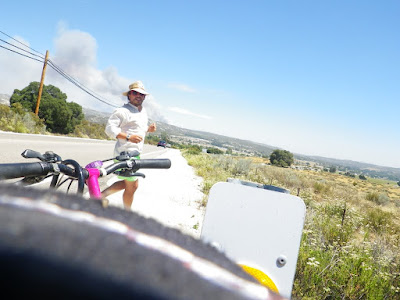
Vincent took a bike on the bus and when Crystal met up with
him they spent their time hiking and exploring around the lake, amidst the
boulder-strewn hillsides of the mountains. I got on the bus at three the next
day, with one of the trusty old mountain bikes from the boat. The bus left town
and wound up through the hills. I was having quite a pleasant time, excited
about traveling to new and exciting places when I heard a collective gasp go up
from the bus passengers and out of the corner of my eye saw my bike performing
a riderless wheelie and subsequent backflip across the other highway lane,
narrowly missing a speeding car. The bus driver pulled over and I ran out
across the road, grabbed the damaged bike, and, feeling quite dismayed, put it
back on the bike rack.
My spirits were low and I was feeling quite frustrated at
having a grand unknown adventure go out the window (or fly off the rack as I
should say) so suddenly. The bus driver was apologetic and when we stopped for
a break at a country store, I surveyed the damage. By the looks of it, aside
from bent handlebars and a scuffed seat, the only injury to the bike had been a
severely bent rear wheel. I asked the kid at the register in the shop about
where I might find a new wheel, to no avail, and stepped out to have a look at
the bike alongside the bus driver. The driver was very apologetic that bike had
managed to squirt out of the rack and mentioned that he might be able to look
around that night for another wheel in Tecate, the Mexican border town in which
he lived. Shortly thereafter a woman, one of the few passengers remaining on
the bus, spoke to the driver in speedy Spanish, telling him that she had an old
bike at her house that I could use.
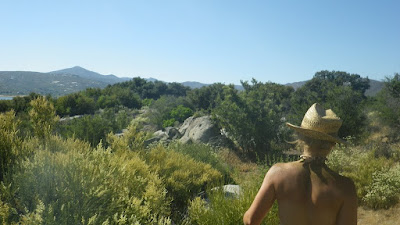
We all got back aboard and the bus drove on. When we got to
the woman’s driveway, the driver told me to be quick and I ran up to the house
to find a few old mountain bikes out back. I picked one up and the woman, just
arriving at the house told me to take the whole bike, as I was in a hurry and
she didn’t have any wrenches to remove a wheel. So back down the driveway I
ran, throwing the derelict bike on the rack and we were off again. Before long
we came to the end of the run and off I went with the two bicycles, greeted by
Crystal and Vincent. We spent the night at the lake and the following morning,
fixed the bike, and saw Crystal off on the bus back to San Diego in the
morning. The bus driver took the other bike back to the woman and I thanked him
greatly for his help in turning around such a disastrous situation. Knowing
well that we would potentially be headed for hot sunny places, I had brought
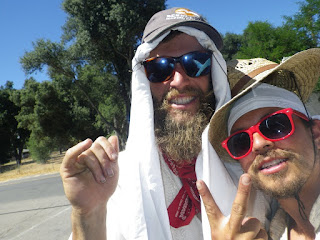
four large white pillowcases to be used as head-wraps of some sort and we
donned these and our sunglasses, ready to hit the road.
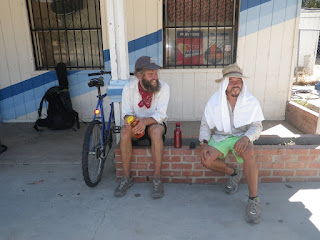
All this was the beginning of a grand adventure that first
took us up and up into the Cleveland National Forest and back down to the town
of Julian. Going was slow and squeaky, as we were both riding old mountain
bikes from the boat. We were also carrying our gear in backpacks rather that
panier bags but despite all this, our spirits were high and our appetite for
adventure and new places kept us happily pushing forward. After a long day of
riding we slept out in the hills above Julian and came into town early in the
morning.
At this point we found ourselves at the divided between
coastal San Diego and the desert over the mountains to the east. We had been
himming and hawing over the idea of going down into the desert since dreaming
up the trip. Everyone we met, from San Diego to Julian, with whom we shared the
idea told us that we’d be crazy to head into the heat but it was all too easy
that morning, with the allure of the desert below, to head down the winding
road to the east. We filled up all our jugs of water and down we went.
Our travels took us miles and miles downhill into dry
country, desolate valleys, and intense heat. By 10 am, we had reached our
destination: the town of Borrego Springs. We celebrated our arrival with some
ice cream and then spent the rest of the afternoon and early evening waiting
out the intense heat of the day at the Anza-Borrego State Park Visitor Center.
We had a lot fun hanging out with the staff and learning about the park. Around
six, we headed out on the road again bound for Coyote Canyon in the northwest
corner of the park. We rode past acres and acres of citrus orchards as well as
dry wasteland that was at some point agriculture land of some sort. Soon enough
the road turned from pavement into sand and we pressed on.
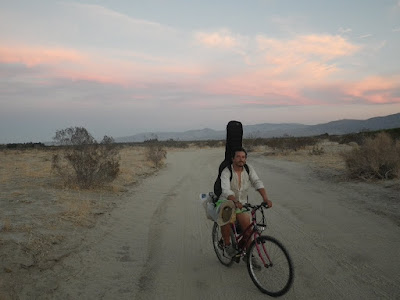
Riding in the sand was no easy task and as the sun went
behind the mountains, a fierce headwind sprang up. We continued on in the dark
for some time, fighting our way up the road, but before long we gave in for the
night, not quite knowing our destination or how far away it was. There was
little shelter to be found from the strong gusts but we were able to tuck our
heads behind a sign by the side of the road and get a little sleep, in spite of
the light of the moon.
In the morning we awoke before the sun and rode on and in
just a few minutes came to a place where a running stream crossed the road.
Incredible! To find running water in such a barren place was truly astonishing.
Even though we had heard that water might be running in the canyon, it was
something different to see in in person.
We continued to the end of the road
and spent the rest of the early morning hiking about, past an oasis and along
the creek, exploring the incredible, surreal landscape before returning to the
first water we had found.
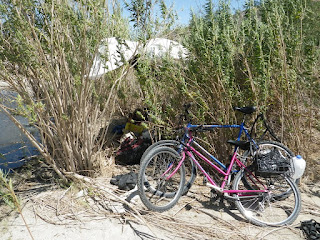
Here we passed the afternoon, soaking ourselves in the creek
and hiding in the bushes under the shade of a makeshift tent structure. When
the time came, we got back on our trusty steeds and headed back for Borrego
Springs. This time we took a different route, past a different camp that
fortunately for us still had running water in the faucets despite the season.
We rode out of the camp and found ourselves again surrounded by orange
orchards. Thinking that we could take a shortcut by riding through one of the orchards (on a road that
looked no different than the roads which we were to travel on) we cut through a
line of trees and started riding, only to be caught moments thereafter by the
farmer himself! At first quite angry with us for trespassing he berated us for
being on his property and for being out in the desert on bikes at this time of
year. He escorted us back to the spot where we entered the orchard and I
apologized again as we headed for the cut. He was checking on an enormous
irrigation pump and as he did he explained his anger which stemmed from the
disrespect and damage caused by people who had trespassed before. We expressed
our sympathy and got to talking a bit more. Soon enough he offered to drive us
out to the main road (the destination of our original shortcut) as he was
headed that way anyways. On the road out he stopped to let us pick a few
handfuls of figs from one of his trees and told us even more about his place
and life. By the time we reached the road we were quite friendly and we stood
around the truck talking, sharing the stories of our adventures as well as
hearing the stories of his life and the wisdom that he had gained. After a good
long while he hopped back in is truck wished us his best and bid us goobye, all
three of us expressing great gratitude for having met one another. Off he drove
and we rode on. This was possibly the best trespassing experience I’ve ever
had.
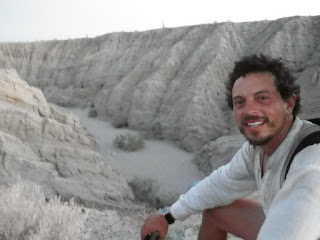
In all our conversation about heading into the desert we had talked of Anza-Borrego
but also of the Salton Sea. Now only thirty miles away, we couldn’t resist the
continued eastward pull and we turned left before reaching Borrego Springs. A
darkness fell, we rode down and down, across great desert plains, and through
vast canyonlands before reaching Salton City around 9:30 pm. We were throwing
caution to the wind in continuing so far east to a place much hotter and
desolate than Anza-Borrego but the downhill ride made it all worth it. At dusk,
as we sped down out of the mountains down to the great flats below, I could not
help but feeling like we were in some prehistoric land, devoid of humans but
full of ancient creatures living in a land that was still young and raw, forming
before our eyes. Truly amazing.
After another celebratory ice cream at the gas station we
rode several miles through the abandoned subdivisions of Salton City. The land
between the freeway and the lake had been developed, gridded out with streets and
powerlines, but the project had flopped for some reason and the land has been
left just so ever since. We got an eerie sense from the place riding though
under the full moon, pas the few inhabited houses and even one that had been
burned, seemingly obvious to us, in order to get insurance money for a house
that was worthless. Again we rode until the pavement turned to sand and
although we could sense that we were near the beach, we stretched out our bags
and fell asleep.
Know full well how hot it was going to be in the morning, we
were up at the crack of dawn and continued riding towards the beach. In only a
matter of minutes the lake stretched out before our eyes and soon we were
standing on the shore.
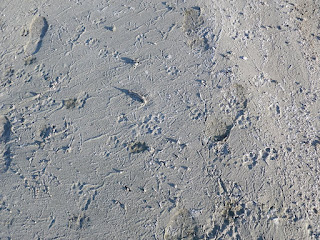
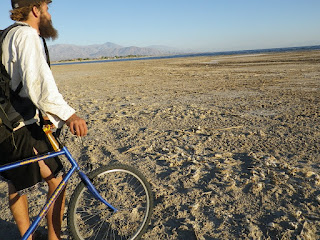
Although it was only 6 am, it was already quite hot and we
could smell a stench coming off the lake. The flats approaching the beach as
well as the shore consisted of a very slimy mud that caked on our shoe s and
smell quite foul. There were “tidelines” of thousands and thousands of fish
skeletons as we approached the water, along with a number of dead birds and
fields of crystallized salt. We walked to the water, tested for salinity, and
quickly resolved to get out of the hellish place. We made our way along the
shore and then along a road back out to the freeway. In the light, we could see
even more of the crazy place: empty street after empty street named after
Hawaiian island or foreign countries and vast tracts of bulldozed earth under
miles of powerlines. Apparently the water level has dropped significantly since
development was done as we saw boat launches that came far from touching the
water and docks that lay high and dry on the mud.
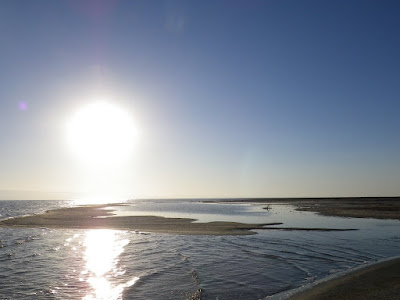
When we got to the freeway, we rode a few feet up the road
back to Borrego Springs and stuck out our thumb. It was now 8 am and the
temperature must have been climbing up to 100 degrees. We laughed and joked
about our situation, and then talked seriously, reassuring ourselves that it
would indeed be possible to ride all those miles back up the hill after things
cooled down in the night. All the same, this sounded like a dreadful prospect.
We waited and waited, put on more sunscreen and drank more water, and then
suddenly a truck stopped. The driver asked with a smile where we were going and
said he could take us. With threw everything in the truck and we were off! As
we drove the man told us how lucky we were because he was actually driving up
and over the mountains from Borrego Springs. For several hours he talked on and
on about his life, the wisdom he had gained and his views of the world.
Although such cases can often be thoroughly overwhelming, the man seemed to
have enough interesting things to say and life experience from which to draw.
He dropped us off in Jenner and we rode down the boulder-covered hills, into the
suburbs of San Diego, catching the trolley and riding all the way back into
town.
For many more pictures of the trip visit our Picasa site at:
Friday, July 6, 2012
Respite in San Diego
Upon arriving in San Diego Bay we planned on staying a few
weeks but all told, we ended up spending over a month on the hook. During this
time, we got to know the city quite well and were able to make a few new
friends. A few of us took the time to travel by land back up to San Francisco
for a visit but most of all we mostly just relaxed. After our big bang
departure from SF and the months of work that led up to it we were a bit worn
out but hadn’t really taken the time to decompress, staying busy on our travels
down the coast.
Although a bit of cleaning was in order and we had a few
small boat projects to address, we hardly even did much work on the boat
itself: a major gear shift from our sedentary time in Berkeley. We borrowed
another bike and spent much of our time exploring and hanging out around the
town and on the boat itself. We spent a lot of time in the large Balboa Park,
riding bicycles and relaxing on the grass, and some of us even made a trip to
the zoo. We all took the trolley to Tijuana for the day, a short scouting
mission into Mexico for fun and dental work, and had time for doing things like
finding mushrooms in the park and identifying them.
The cruising anchorage was just fine, well protected and
safe in all regards. The drawbacks to the spot were the long row (15 minutes or
so) to the dinghy dock and the noise of the place. Loudest and most constant
was the San Diego airport, located on shore just over a waterside road.
Throughout the day, the air was filled with the sound of jets landing and
taking off. If that wasn’t enough, helicopters took off and landed at the Coast
Guard Station several time daily. San Diego Bay is, of course, home to an
enormous naval base and the nature of the highly militarized harbor had us
feeling uneasy. Harbor Police boats would pass by frequently just added to the
feeling of the place, although they probably helped to keep things mellow on
the bay. What’s more navy personnel were out in large skiffs slowly motoring
around calm anchorage as they worked with specially-trained Navy dolphins and
sea lions. Very weird!
We were fortunate to have a few connections in San Diego,
mostly through Lowell’s dear friend Pria, who he befriended in India many years
ago. We spent a fair amount of time at her place and with her housemates,
taking showers, using the computers, and getting to know everybody. After
spending so long in the familiar San Francisco Bay, we couldn’t help but feel
that San Diego was a bit of a social desert and we were happy to have a few
friends.
Of great interest to me was a trip made with Pria to the
International Rescue Committee’s refugee garden. Pria has been coordinating the
garden for several months and we were happy to come on a volunteer day to see
the place and help out with a few projects. The garden is a couple of acres a
few miles east of downtown that is divided into many plots that are tended by
refugees from around the world.
Some plots serve the function of a home garden while others
are used to grow food for sale at farmer’s markets around town. Some of the
refugees had even been contracted to grow mint by a local chocolate company
interested in sourcing local ingredients.
The diversity of types of gardens and ethnicities of
gardeners made for quite the collage of plots, styles, and plants. There were
beautiful, intensively-cultivated beds of water spinach and other greens next
to plots of more perennial-heavy, wild-looking home gardens. Of special
interest were several large perennial eggplant bushes covered with hundreds of berry-like
eggplants. Incredible!
We spent the morning reorganizing the collective composting
system in preparation for a large operation that would accept compost from
several local grocery stores, mulching bananas, spreading wood chips, and talking with a few of the
other volunteers before heading off to the farmer’s market. After the market we
wandered down the street and got a chance to have a look at a nursery and
aquaponics system in nearby City Heights, also affiliated with the IRC. We were
all quite impressed by the clean, organized, and abundant operation. Thanks to Antonio
for taking the time to show us around and congratulations to the IRC for
running a garden program that is obviously extremely valuable to farming people
from around the world who are dropped into an apartment in the concrete jungle
of San Diego. As Pria explained though, the need for gardening space greatly
outweighs the space available in refugee communities. It seems the same is true
for all people in places like San Diego!
We whiled away the rest of our time in San Diego doing much
of the same. I had great success busking (playing banjo and singing) up in
Balboa Park and had a lot of fun while making a pile of dollar bills over the
course of our last few weeks in town. Although it was nice to relax, we all
began to get a little restless in the setting of San Diego and so a few of us
decided to head east to see what adventure awaits us in the mountains and
beyond.
Fo more pictures visit our Picasa site at: https://picasaweb.google.com/103461058936929561161/SanDiego
Subscribe to:
Posts (Atom)